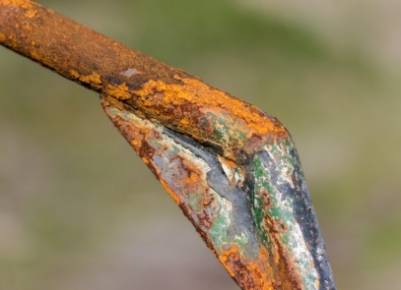
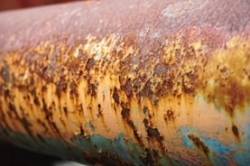

Why does a material corrode?
Galvanic corrosion
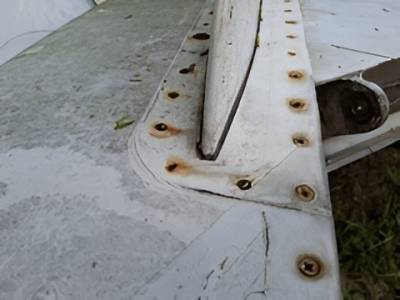
Danger and solutions
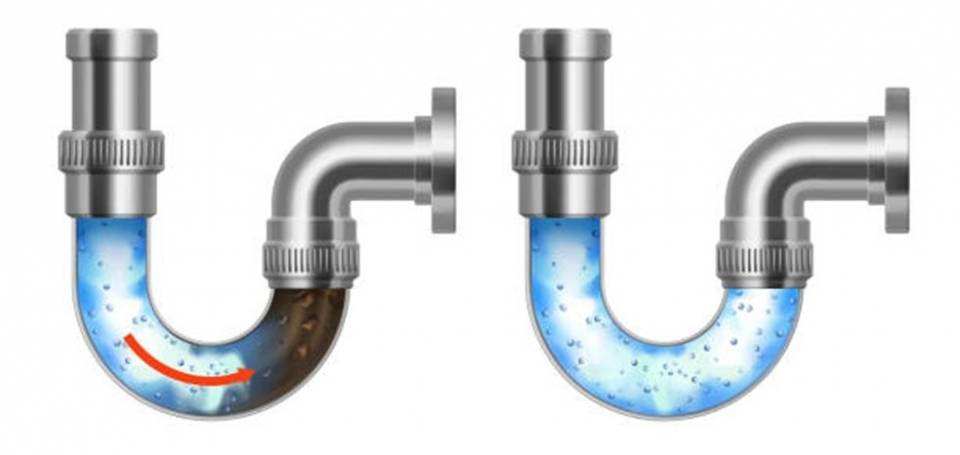
Finally, corroded metal can also alter the water’s chemistry: changing the pH, increasing conductivity, or even reducing the disinfectant’s effectiveness. The water becomes less stable and more susceptible to contamination 6 .
The dangers associated with galvanic corrosion are numerous. However, it is possible to prevent its formation. Several solutions are possible, for example:
- Choosing identical materials (steel on steel or copper on copper) 3,
- Adding a dielectric fitting to prevent the passage of electric current between the metals 3,
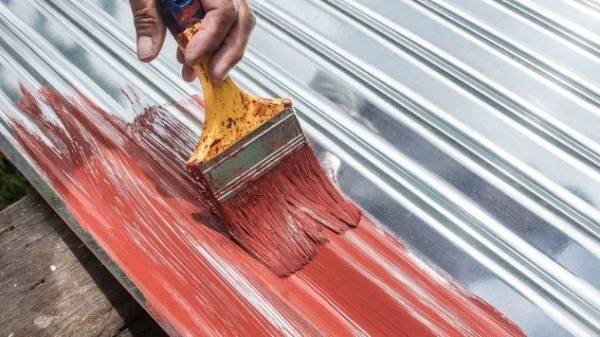
- Adding protective coatings (paint, anti-corrosion tape) 3.
2. https://publications.gc.ca/collections/collection_2020/pch/CH57-4-22-2019-fra.pdf
3. https://www.phcppros.com/articles/2867-corrosion-plumbing-piping
5. https://www.q8oils.com/fr/travail-des-metaux/la-corrosion-expliquee/
7. https://www.corrosion-doctors.org/Landmarks/Statue.htm
8. https://primis.phmsa.dot.gov/comm/FactSheets/FSInternalCorrosion.htm
We use cookies
Respecting your privacy matters to us. We use cookies to personalize our content and facilitate your digital experience. Some cookies may be collected with your consent.
Essential
Essential cookies help make a website usable by enabling basic functions such as page navigation and access to secure areas of the website. The website cannot function properly without these cookies.
Performance
These cookies enable us to analyze navigation on our sites and improve their operation.
Customization
Preference cookies enable a website to remember information that modifies the behavior or appearance of the site, such as your preferred language or the region you are in.
Targeted advertising
These cookies help us limit the number of times you see an advertisement, personalize our offers and services according to your centers of interest, measure the effectiveness of an advertising campaign, and so on. They may be shared with our partners.
We use cookies
Respecting your privacy matters to us. We use cookies to personalize our content and facilitate your digital experience. Some cookies may be collected with your consent.