Water Meters & Pricing
Reuse of treated wastewater
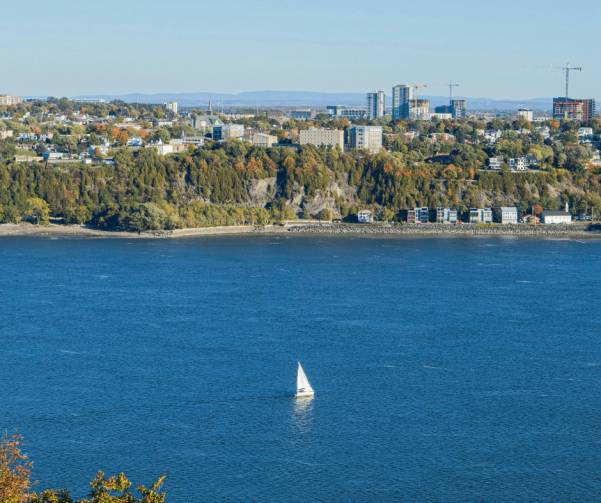
Did you know that in Quebec, we consume about twice as much drinking water as Europeans? We grew up with the longstanding perception that water is an abundant and limitless resource, a belief reinforced by the fact that Quebec is home to approximately 3% of the world's renewable freshwater reserve1. Furthermore, drinking water is readily available for a wide range of everyday uses, from faucets and showers to toilets and garden hoses, etc.
In 2021, the average volume of drinking water distributed per Quebec resident served was established at 513 litres per day, making it the second province in Canada, after Newfoundland and Labrador, who consumes the most drinking water2.
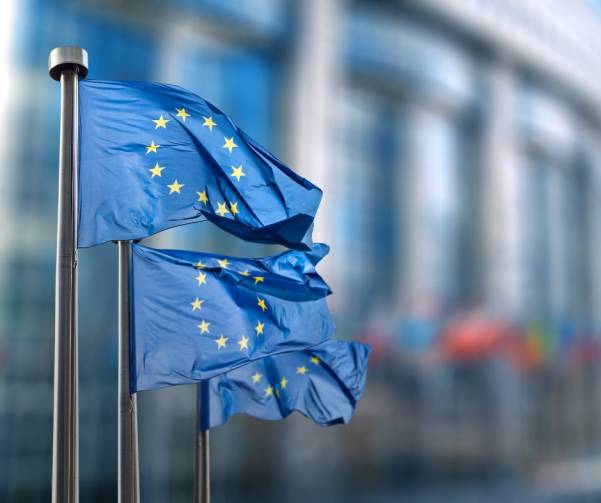
For their part, Europeans face recurrent droughts and limited drinking water resources. Our culture of abundance contrasts sharply with that of Europe, which prioritizes preservation. This situation raises the question: what are Europeans doing to minimize their consumption? And more importantly, could some of these practices be adapted to the Quebec context?
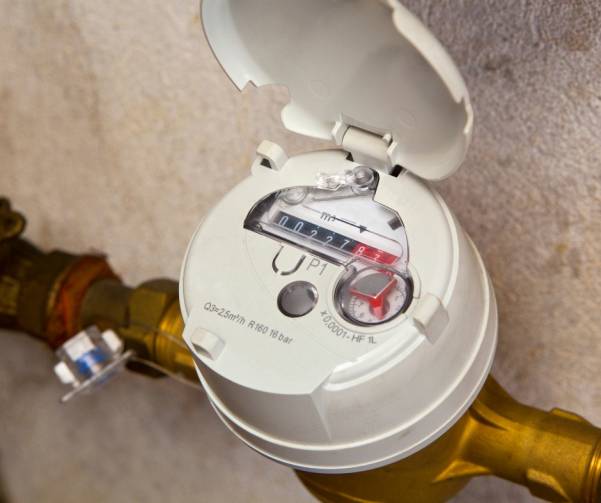
Water meters are an effective tool for monitoring water consumption in buildings and are particularly useful for identifying leaks. However, they remain relatively uncommon in Quebec’s covered through municipal taxation. residential sector, where they are installed in only 14% of buildings3. Their primary use is to support the management of water distribution infrastructure and to promote public awareness of water consumption. While some municipalities have introduced residential water metering to bill households for excessive use, this practice is not widespread. In most cases, drinking water treatment and distribution costs are covered through municipal taxation.
In contrast, residential water meters are widely used across Europe, where households are typically charged based on their actual water consumption ($/m³)4. As a result, residents tend to be more conscious of their water use since excessive consumption directly affects their utility bills.
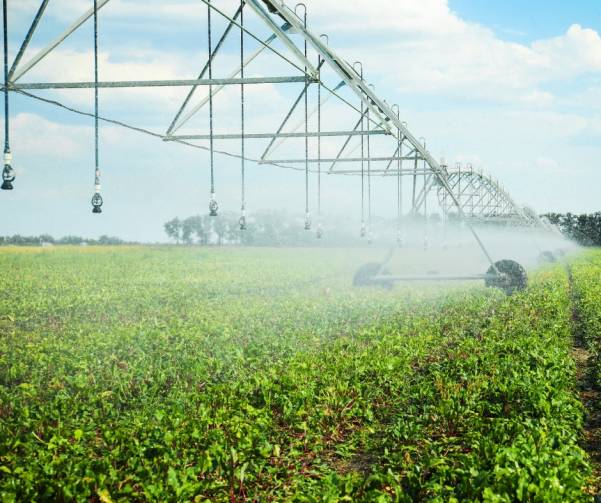
Agriculture requires substantial amounts of water withdrawal, averaging around 22% of total volumes5. For agricultural irrigation, the European Union has invested heavily in developing the reuse of treated wastewater from wastewater treatment plants to address the increasing pressure on water resources. Although on average only 2.4% of this water has been reused across the EU since its implementation, some countries, such as Cyprus, reuse up to 89% of their wastewater6. This practice varies depending on climate and water scarcity.
In Quebec, the reuse of treated wastewater is highly regulated, and sanitation requirements are extremely high. The abundance of water and the significant investment costs required to adapt water treatment infrastructure, not to mention the health risks, explain the reluctant to adopt this practice. Quebec does, however, have other methods for reducing drinking water consumption, such as rainwater harvesting.
In summary, is Europe better when it comes to water consumption? Not necessarily: much of the difference can be attributed to the contrasting climatic conditions and levels of pressure on water resources in the two regions. Many European countries have adopted water conservation measures out of necessity, given the growing demand for water and the limited availability of this resource.
Quebec is not entirely without solutions or initiatives, but the government could still adapt some of these practices or make them mandatory to encourage their widespread adoption. Promoting the installation of residential water meters and implementing volumetric water pricing at the municipal level would be a good first step toward increasing public awareness of water waste. There is still time to shift this culture of abundance and reduce unnecessary water consumption before it is too late!
1. Ministère de l’Environnement, de la Lutte contre les changements climatiques, de la Faune et des Parcs. (n.d.). Québec’s water: A resource to be protected. Gouvernement du Québec. https://www.environnement.gouv.qc.ca/eau/inter_en.htm
2. Association des professionnels de la construction et de l’habitation du Québec. (2026, March). Étude sur le sous-financement des infrastructures d’eau au Québec : Rapport final. https://media.apchq.com/Uy6TyENnTpe0f7bqmmYTkA/apchq_etude_infra_2026-03 19c.pdf
3. Pensez bleu. (2025, August 25). Démystifier les compteurs d’eau. https://pensezbleu.com/2025/08/25/demystifier-les-compteurs-deau/
4. Onillon, A., & Fribourg-Blanc, B. (2023, Mach). Les modèles économiques de gestion et de tarification de l’eau en Europe : Synthèse. Office International de l’Eau. https://www.europaong.eu/wp-content/uploads/2023/06/Gestion-et-tarification-de leau_SYNTHESE-2023.pdf
5. Initiatives for the Future of Great Rivers. (2020, May 22). Europe: Towards the use of treated wastewater for irrigation. https://www.initiativesrivers.org/actualites/europe-vers lutilisation-eaux-usees-traitees-lirrigation/
6. Representation in France. (2023, June 26). New European standards for the use of treated wastewater in agriculture. European Commission. https://france.representation.ec.europa.eu/informations-et evenements/informations/nouvelles-normes-europeennes-pour-lutilisation-des-eaux-usees traitees-en-agriculture-2023-06-26_fr?prefLang=en&etrans=en
We use cookies
Respecting your privacy matters to us. We use cookies to personalize our content and facilitate your digital experience. Some cookies may be collected with your consent.
Essential
Essential cookies help make a website usable by enabling basic functions such as page navigation and access to secure areas of the website. The website cannot function properly without these cookies.
Performance
These cookies enable us to analyze navigation on our sites and improve their operation.
Customization
Preference cookies enable a website to remember information that modifies the behavior or appearance of the site, such as your preferred language or the region you are in.
Targeted advertising
These cookies help us limit the number of times you see an advertisement, personalize our offers and services according to your centers of interest, measure the effectiveness of an advertising campaign, and so on. They may be shared with our partners.
We use cookies
Respecting your privacy matters to us. We use cookies to personalize our content and facilitate your digital experience. Some cookies may be collected with your consent.